

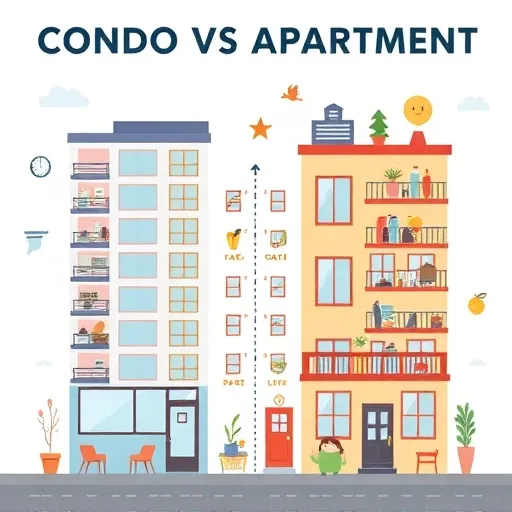
Condo vs apartment d
The Short Answer: It Depends on Ownership, Not Architecture
Here's the thing most people get wrong about the condo vs apartment comparison: the difference has nothing to do with how the building looks. A sleek high-rise with floor-to-ceiling windows could be either one. A cozy low-rise walk-up could be either one too. The condo vs apartment distinction isn't about architecture, design, or building height — it's about something way less visible but far more important.
The real difference in any condo vs apartment debate comes down to ownership structure. That's it. That's the whole ballgame.
- Condominium (condo): Each individual unit is separately owned. The owner might live in it, rent it out, or use it as an investment property. Common areas — hallways, elevators, gyms, pools — are jointly owned and maintained by all unit owners through a homeowners association or similar governing body. So when you're comparing condo vs apartment, the condo side always involves individual ownership and shared responsibility for common elements.
- Apartment: The entire building is owned by a single entity — typically a property management company, a real estate investment firm, or a private landlord. All units are rented out. Tenants don't own anything; they lease. In the condo vs apartment equation, the apartment side means one owner, many renters.
So when you hear someone say "I bought a condo" versus "I rent an apartment," they're actually describing two completely different legal and financial relationships with the property. The condo vs apartment distinction is fundamentally about what you own versus what you rent.
Why the Confusion Around Condo vs Apartment Exists in the First Place
In some markets — particularly in certain English-speaking countries — the word "apartment" is used generically to describe any unit within a multi-unit building, regardless of ownership. Meanwhile, "condo" specifically signals the ownership model. In other regions, the terms flip entirely, and "flat" or "unit" becomes the neutral catch-all. This regional inconsistency is a huge reason the condo vs apartment conversation gets so muddled.No Deposit Bonus
Adding to the confusion, a condo can be rented out just like an apartment. So if you're a tenant, you might live in a condo without ever knowing it — your lease looks the same, your rent check goes to the same place, and your day-to-day experience might be nearly identical. The condo vs apartment label on the building means nothing to your daily routine in that scenario.
But here's where it gets interesting: the ownership structure trickles down into maintenance, rules, fees, and even the vibe of the community. And in 2026, those differences in the condo vs apartment landscape are more pronounced than ever.
Ownership and Investment: Two Very Different Games in the Condo vs Apartment World
Buying a Condo
When you purchase a condominium, you're buying a specific unit plus a share of the common elements. You get a deed, you pay property taxes, and you typically pay monthly association fees that cover shared expenses like landscaping, security, and building repairs. This is the core of what separates condo vs apartment living — you actually own something.
The upside? You build equity. You can renovate (within association rules). You can rent it out for passive income. And in many urban markets, condos remain one of the most accessible entry points into homeownership — especially for younger buyers who can't afford a standalone house. That's a massive point in favor of the condo side of the condo vs apartment debate.
The downside? Association fees can creep up. Special assessments for major repairs can hit you unexpectedly. And you're subject to rules you didn't write — like restrictions on short-term rentals, pet policies, or even paint colors.
Renting an Apartment
When you rent an apartment, you're paying for temporary occupancy. No equity, no property taxes, no association fees. But also no long-term financial commitment and far more flexibility to move when your life changes. This is the apartment side of the condo vs apartment equation — freedom over ownership.
Maintenance is typically handled by the property management team. If the water heater breaks at 2 a.m., you make a call and someone else deals with it. That peace of mind is a big reason why many people — even those who could afford to buy — choose to rent.
The trade-off? Rent can rise. Your lease can be terminated (with proper notice). And you're building your landlord's equity, not your own.
Maintenance, Fees, and Who Fixes What in the Condo vs Apartment Breakdown
This is where the condo vs apartment comparison gets super practical.No Deposit Bonus
In a condo, interior maintenance is usually the owner's responsibility. That means the kitchen appliances, the flooring, the interior walls — all on you. The association handles the exterior and shared spaces. If you're renting a condo from an individual owner, your landlord handles the interior, but the association still governs the building.
In an apartment, the property management company handles virtually everything. You report a problem, they fix it. You don't pay separate association fees; those costs are baked into your rent. That's a key practical difference in the condo vs apartment reality.
Here's a quick comparison:
- Condo owner: Pays mortgage, property tax, insurance, association fees, interior maintenance.
- Condo renter: Pays rent to the unit owner; owner handles association fees and major repairs.
- Apartment renter: Pays rent to the property management company; everything else is their problem.
The 2026 Twist: Hybrid Work, Smart Buildings, and the Evolving Condo vs Apartment Landscape
The pandemic-era shift to remote work and hybrid schedules didn't just change where people work — it changed what they need from where they live. By 2026, that shift has fully settled into the housing market, and it's affecting both sides of the condo vs apartment divide in fascinating ways.no deposit bonus
Home Office Is No Longer Optional
Renters and buyers alike are prioritizing units with dedicated office space, high-speed internet, and sound insulation. Buildings that offer co-working lounges or private phone booths are commanding premium prices. Whether it's a condo or an apartment, if it doesn't have a workable home office setup, it's losing out. The condo vs apartment choice now hinges partly on which one better supports your work-from-home life.
Smart Building Technology
Keyless entry, app-controlled climate systems, package lockers with facial recognition, and energy monitoring dashboards are becoming standard in new developments. Older buildings — whether condo or apartment — are retrofitting to keep up. For tenants and owners alike, these features are now part of the value proposition. The condo vs apartment competition now includes a tech arms race.
Flexible Ownership Models
New financing structures and co-ownership platforms have emerged, blurring the line between renting and buying. Some platforms offer "rent-to-own" condos. Others let you buy a fraction of a unit. These hybrid models are especially popular in high-cost urban markets where traditional ownership feels out of reach. They're also making the condo vs apartment question way more complicated than it used to be.
Pros and Cons at a Glance: Condo vs Apartment
Condominium
Pros:
- Build equity over time
- Potential for rental income
- More control over interior customization
- Sense of community ownership
Cons:
- Association fees and special assessments
- Rules and restrictions on usage
- Responsibility for interior maintenance
- Less flexibility if you need to move quickly
Apartment
Pros:
- Low upfront cost
- Maintenance handled by management
- Easy to move when life changes
- No long-term financial commitment
Cons:
- No equity building
- Rent increases
- Less control over your living environment
- Potential for lease non-renewal
Which One Is Right for You in the Condo vs Apartment Decision?
There's no universally correct answer here — it depends entirely on your financial situation, lifestyle, and long-term goals. The condo vs apartment choice is personal.
Choose a condo if: You're ready to put down roots, you want to build equity, you're comfortable with the responsibilities of ownership, and you plan to stay put for at least a few years.
Choose an apartment if: You value flexibility, you're not ready for the financial commitment of ownership, you want someone else to handle maintenance, or you're testing out a new city before committing long-term.
And remember: just because a building is labeled one way doesn't mean it functions that way in practice. A condo rented out by its owner might feel exactly like an apartment. An apartment building with a strong community culture might feel more like a condo. The label matters less than the actual terms of your lease or purchase agreement. That's the real takeaway from any honest condo vs apartment discussion.
What to Ask Before You Sign Anything in a Condo vs Apartment Search
Whether you're renting or buying, here are some questions worth asking:
- Who is responsible for maintenance and repairs?
- Are there association fees, and what do they cover?
- What are the rules around pets, guests, and short-term rentals?
- How often has rent or association fees increased in recent years?
- What's the process for resolving disputes?
- Is there a reserve fund for major repairs?
These questions apply whether you're looking at a condo or an apartment — and the answers will tell you far more about what you're getting into than the label on the listing. In the end, the condo vs apartment debate isn't really about which one is better. It's about which one fits your life right now — ownership, rental income, equity, maintenance, fees, and all.